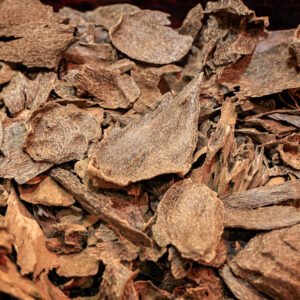
Oud wood has a presence that few natural fragrance materials can match. It smells ancient and alive at the same time: smoky, resinous, dark, sweet, leathery, earthy, and sometimes almost honeyed. A small piece placed on gentle heat can perfume an entire room, while a single drop of well-aged oud oil can remain on the skin for hours.
Part of oud’s fascination comes from the fact that it is not ordinary wood. It is a rare aromatic resin formed inside specific agarwood-producing trees, mainly from the Aquilaria and Gyrinops genera. The tree must undergo stress, injury, or infection before it produces the resin that eventually becomes fragrant oud wood. This slow, unpredictable natural process is one of the main reasons oud is considered the world’s most valuable fragrant wood.
At Fatma Perfumes, oud is viewed not only as a luxury ingredient but as a heritage material. It connects forests, distillers, traders, perfumers, incense rituals, and fragrance lovers across generations. This guide explains what oud wood is, how it forms, why it costs so much, how it smells, how to recognize quality, and how to choose it with confidence.
What Is Oud Wood?
Oud wood is resin-rich agarwood used in incense, perfumery, Dehn Al Oud, bakhoor, and traditional fragrance rituals. The fragrant material develops inside certain tropical trees when the tree reacts to biological or physical stress by producing a dark protective resin.
In a healthy, unaffected agarwood tree, the inner wood is usually pale, light, and only mildly scented or almost scentless. Oud appears when resin spreads through the heartwood, gradually turning parts of the wood darker, denser, and aromatic. The best pieces may contain visible resin lines, deep coloration, and a scent that becomes richer when warmed.
For readers who want to understand the tree behind oud, Fatma Perfumes has a dedicated guide on the agarwood tree, nature’s source of liquid gold.
Oud Wood, Agarwood, Oudh, and Dehn Al Oud: The Terms Explained
The fragrance world uses several related terms, and they can be confusing at first. Here is the simplest way to understand them:
| Term | Meaning | Common Use |
|---|---|---|
| Agarwood | The resinous wood formed inside agarwood-producing trees. | Botanical, trade, and raw material discussions. |
| Oud wood | Fragrant agarwood used for incense, perfumes, and rituals. | Luxury fragrance and Arabian perfumery. |
| Oudh | An alternate spelling of oud, common in South Asia and the Gulf. | Retail, cultural, and traditional fragrance markets. |
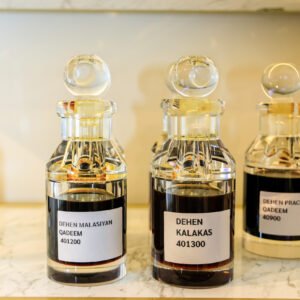
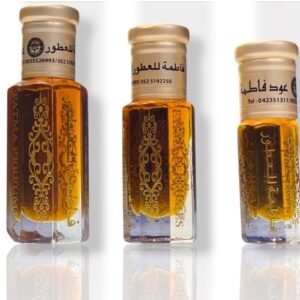
| Dehn Al Oud | Pure oud oil distilled from resinous agarwood. | Personal fragrance, attars, and luxury oils. |
For a closer comparison, read Fatma Perfumes’ explanation of agarwood vs oudh and how the terms differ.
How Oud Wood Forms Inside the Tree
The formation of oud wood begins with the tree’s natural defense system. When an agarwood-producing tree is wounded by insects, storms, broken branches, environmental stress, or microbial activity, it may produce resin to protect the affected tissue.
This resin slowly saturates the inner wood. Over time, it changes the wood’s appearance, weight, and aroma. The pale heartwood becomes darker and more fragrant. The scent can continue to develop as the resin matures.
The Oud Formation Process in Simple Steps
- The tree experiences stress or injury. This may happen naturally or through controlled cultivation methods.
- The tree produces protective resin. Resin is part of the tree’s response to the affected area.
- The resin spreads through the heartwood. The wood becomes darker, heavier, and more aromatic.
- The fragrant profile matures. The scent develops layers such as smoke, earth, sweetness, leather, spice, and balsamic warmth.
- The resinous wood is harvested and graded. Skilled sorting determines which pieces are suitable for incense, oil distillation, or perfumery.
Because this process is slow and inconsistent, not every tree produces commercial-quality oud. Even within the same tree, one section may contain rich resin while another remains pale and low in aroma.
Why Oud Wood Is the World’s Most Valuable Fragrant Wood
Oud’s value comes from a rare combination of natural scarcity, cultural importance, labor-intensive production, and extraordinary scent complexity. Unlike many fragrance ingredients that can be harvested annually, genuine oud depends on years of resin formation and careful selection.
1. Natural Oud Is Rare
Only a portion of agarwood-producing trees develop fragrant resin, and only some of that resin reaches a high grade. This rarity is especially pronounced in wild oud, which has historically been prized but is now tightly controlled due to conservation concerns.
Plantation-grown agarwood has helped supply the market more responsibly, but high-quality resin still requires time, expertise, and careful handling.
2. It Takes Years to Develop
Oud wood cannot be rushed in the way synthetic fragrance materials can be manufactured. Resin formation may take years, and the aromatic profile often improves with maturity. This long timeline affects availability and price.
Fatma Perfumes covers the larger production process in this guide to how agarwood is harvested and distilled into luxury perfume.
3. The Scent Is Deeply Complex
High-quality oud does not smell flat. It changes with heat, time, and skin chemistry. A good piece of oud wood may open with dry smoke, move into warm resin, reveal a sweet balsamic heart, and finish with leather, earth, or spice.
This complexity is why oud is used as a base note in luxury perfumes. It gives structure, longevity, and character to a composition.
4. It Has Centuries of Cultural Value
Oud is woven into the fragrance traditions of the Arabian Gulf, India, Southeast Asia, and East Asia. In the UAE, oud is associated with hospitality, refinement, prayer, celebration, and personal elegance. Guests may be welcomed with oud smoke, garments may be scented with bakhoor, and Dehn Al Oud may be worn for special occasions.
For cultural context, read Fatma Perfumes’ guide to oudh meaning in the UAE.
5. Distillation Requires Skill and Patience
Oud oil is extracted from resinous wood through hydro-distillation or steam distillation. The yield can be low, and the final oil depends heavily on the wood’s origin, resin density, soaking method, distillation time, and post-distillation aging.
This is why two oud oils from the same country can smell very different. One may be smoky and animalic, while another may be sweet, smooth, and balsamic.
What Does Oud Wood Smell Like?
Oud wood is famously difficult to describe because its scent depends on region, species, grade, age, resin content, and method of use. A beginner might first notice smoke and wood. An experienced collector may detect layers of leather, dried fruit, damp earth, incense, spice, honey, barnyard warmth, camphor, or dark amber.
Common Scent Notes in Oud Wood
- Smoky: Soft incense smoke, charred wood, or warm embers.
- Woody: Dark, dry, resinous, and grounding.
- Sweet: Honeyed, balsamic, fruity, or caramel-like in some varieties.
- Leathery: Smooth, dark, and luxurious.
- Earthy: Forest floor, roots, damp soil, or aged wood.
- Spicy: Hints of saffron, clove, pepper, or warm spice.
- Animalic: Musky, bold, and traditional, especially in some Hindi oud profiles.
- Medicinal: Camphor-like or herbal facets, often found in certain regional oils and woods.
This variety is part of oud’s appeal. Some fragrance lovers prefer sweet Cambodian-style oud, while others seek the bold depth of Hindi oud or the refined smoothness of Vietnamese profiles.
Major Types of Oud Wood by Region
Regional origin strongly influences oud’s character. The scent is shaped by tree species, climate, soil, resin formation, harvesting practices, and local processing traditions.
Indian Oud
Indian oud, often called Hindi oud, is known for its strong, deep, leathery, animalic, and traditional profile. It is highly respected in Gulf fragrance culture because of its powerful presence and long-lasting character.
To explore this style further, Fatma Perfumes has a guide on Indian oud and authentic oud in Dubai. Shoppers can also browse the Indian oud and Hindi oud collection.
Cambodian Oud
Cambodian oud is widely appreciated for sweet, fruity, honeyed, and warm resin notes. It is often smoother and more approachable than very animalic oud styles, which makes it popular in both traditional oils and modern oud perfumes.
For a practical comparison, read Oudh Hindi vs Oudh Cambodi.
Malaysian Oud
Malaysian oud is often balanced, woody, resinous, and gently sweet. Many fragrance lovers appreciate it because it can feel elegant without becoming too heavy. Fatma Perfumes offers a dedicated Malaysian oud selection for those interested in this regional profile.
Indonesian Oud
Indonesian oud varies by island and forest region. It may be smoky, earthy, green, spicy, dry, or resinous. Kalimantan, Sumatra, and other producing regions have distinct aromatic identities. Explore regional styles through the Indonesian oud collection.
Philippine Oud
Philippine oud has gained attention for its distinctive woody and resinous character. Depending on grade and source, it may offer clean smoke, sweetness, or a refined drydown. Fatma Perfumes features a Philippine oud collection for buyers who enjoy regional diversity.
Sri Lankan Oud
Sri Lankan oud can offer elegant woody warmth, clean smoke, and resinous depth. It is often explored by collectors looking beyond the more familiar Indian, Cambodian, and Malaysian styles. Browse the Sri Lankan oud collection to compare available profiles.
Oud Wood in Perfumery
Oud is a treasured base note in luxury perfumery because it brings depth, tenacity, and character. It anchors lighter notes and adds richness to floral, spicy, amber, musk, and woody compositions.
Modern oud perfumes may contain natural oud oil, synthetic oud accords, or a blend of both. Natural oud gives complexity and evolution, while carefully crafted accords provide consistency and accessibility.
Classic Oud Pairings
| Pairing | Effect in Perfume |
|---|---|
| Oud and rose | Romantic, opulent, floral, and deeply Arabian. |
| Oud and amber | Warm, resinous, sweet, and long-lasting. |
| Oud and saffron | Spicy, luxurious, and bold. |
| Oud and musk | Soft, sensual, and wearable. |
| Oud and leather | Dark, smoky, masculine, and refined. |
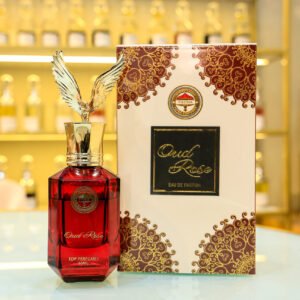
Oud and rose is one of the most celebrated combinations in perfumery. If you enjoy rose-led compositions, read about Tyfe Rose, a luxurious and romantic scent, or explore Oud Rose from Fatma Perfumes.
For those interested in finished fragrances, the oud perfume collection includes scents designed around the richness of oud.
Oud Wood as Incense: Chips, Bakhoor, and Dukhoon
Before oud became a global perfume note, it was cherished as incense. Oud chips are heated over charcoal or an electric burner to release aromatic smoke. The quality of the smoke depends on the resin content, purity, cut, origin, and heat level.
Gentle heat is usually better than aggressive burning. Too much heat can scorch the wood quickly and flatten the aroma. Slow heating allows the resin to release its character in stages.
Traditional Uses of Oud Smoke
- Scenting the home before receiving guests.
- Perfuming clothing, scarves, and hair.
- Creating a calm setting for prayer or reflection.
- Marking weddings, Eid gatherings, and family celebrations.
- Layering fragrance before applying perfume oil.
For more practical advice on burners and oils, read the magic of oudh perfume oils and burners. Fatma Perfumes also offers bakhoor and dukhoon for those who enjoy traditional home fragrance rituals.
Natural Oud Wood vs Oud Accord
Not every oud perfume contains natural oud wood oil. Many modern fragrances use an oud accord, which is a perfumer’s interpretation of the oud smell. This is not automatically negative. A well-made accord can be beautiful, stable, and more affordable. Still, it is different from natural oud.
| Type | What It Offers | Best For |
|---|---|---|
| Natural oud wood | Authentic resin smoke, depth, and regional character. | Incense lovers and collectors. |
| Pure oud oil | Long-lasting skin scent with rich complexity. | Attar wearers and luxury oil enthusiasts. |
| Oud accord | Consistent oud-like impression in perfume formulas. | Modern perfumes and everyday wear. |
| Blended oud perfume | Balanced oud with florals, musk, amber, spices, or woods. | People who want elegance without overwhelming intensity. |
If you are deciding between oils and sprays, Fatma Perfumes explains the difference in agarwood oil vs agarwood perfume.
How to Identify High-Quality Oud Wood
Buying oud wood can be challenging because appearance alone does not tell the full story. Some pieces look dark but have little true resin. Others may be artificially colored or perfumed. Good oud should be assessed by appearance, scent, density, burn quality, and sourcing information.
Signs of Good Oud Wood
- Natural resin streaks: Look for dark lines or patches that appear embedded in the wood rather than painted on.
- Balanced aroma: The scent should feel natural, not like added perfume or chemicals.
- Pleasant smoke: When heated gently, good oud produces smooth, aromatic smoke.
- Weight and density: Resin-rich pieces often feel heavier than pale, dry wood.
- Scent development: Quality oud changes as it warms, revealing different layers.
- Clear origin or grade details: Trustworthy suppliers can usually explain the type, source, and use.
Warning Signs to Avoid
- Strong perfume smell before heating.
- Unnaturally black, glossy, or uniform coloring.
- Harsh smoke that irritates quickly.
- Very low price for a supposedly premium grade.
- No information about origin, grade, or intended use.
Beginners may find it helpful to read how to identify pure agarwood before purchasing premium oud chips or oils.
What Determines the Price of Oud Wood?
Oud wood prices vary widely. A small quantity of high-grade oud can cost far more than a large quantity of low-grade material. Price depends on resin density, aroma quality, origin, scarcity, age, treatment, legality, and demand.
| Price Factor | Why It Matters |
|---|---|
| Resin content | Higher resin usually means stronger aroma and greater value. |
| Origin | Certain regions are known for highly desirable scent profiles. |
| Grade | Better grades usually have richer scent, cleaner smoke, and more resin. |
| Wild vs cultivated | Wild oud is rarer, but legal and sustainable sourcing is essential. |
| Aroma complexity | Smooth, layered oud is more sought after than flat or harsh material. |
| Purity | Untreated, naturally fragrant oud is more valuable than scented or altered wood. |
For Dubai buyers, Fatma Perfumes has a practical guide on oud price in Dubai and what to know before buying. Market-focused readers may also find this agarwood price guide useful.
Sustainability, CITES, and Responsible Oud
Sustainability is central to the future of oud. Some agarwood-producing species have faced pressure from overharvesting, especially where wild trees were cut without proper management. For this reason, many agarwood species are regulated under CITES, which monitors international trade in protected species.
Responsible oud businesses pay attention to legal sourcing, traceability, plantation cultivation, replanting, and ethical trade. Cultivated agarwood does not remove the need for expertise; it still requires years of care and skilled resin development. But it can help reduce pressure on wild forests when managed properly.
What Responsible Oud Sourcing Should Consider
- Legal harvesting and export documentation where required.
- Plantation-grown or responsibly managed sources.
- Transparent grading and product descriptions.
- Avoidance of misleading claims about wild or rare origins.
- Respect for conservation rules and local communities.
For those interested in cultivation, Fatma Perfumes also discusses agarwood plantation as a long-term vision and investment.
How to Use Oud Wood Properly
Oud wood is best enjoyed with patience. The goal is not to burn it quickly, but to warm the resin slowly so its aroma unfolds.
Using Oud Chips on Charcoal
- Light the charcoal until it is evenly heated and no longer producing harsh smoke.
- Place a small piece of oud on the charcoal.
- Allow the resin to release slowly.
- Use small pieces first; high-quality oud can be very potent.
- Ventilate the room if the smoke becomes too intense.
Using Oud on an Electric Burner
An electric burner gives more control over temperature. Start low and increase heat gradually. This method is often preferred for premium oud because it reduces scorching and helps reveal subtle notes.
How to Store Oud Wood and Oud Oil
Proper storage protects oud’s aroma. Oud wood should be kept away from sunlight, heat, excess humidity, and strong external odors. Airtight containers made of glass, metal, or quality wood are commonly used by collectors.
Storage Checklist
- Keep oud chips in an airtight container.
- Store in a cool, dry place.
- Avoid direct sunlight.
- Keep away from perfumes, spices, cleaning products, and incense blends with strong added oils.
- Handle with clean, dry hands.
- Store oud oil in a tightly closed bottle away from heat and light.
Many oud oils become smoother with age when stored properly. Wood chips can also retain their beauty for a long time if protected from moisture and contamination.
Buying Oud Wood in Dubai and the UAE
Dubai is one of the world’s most active markets for oud, Dehn Al Oud, bakhoor, dukhoon, and Arabic perfumes. The variety is impressive, but it also means buyers should be selective. A reliable oud supplier should help you understand origin, grade, aroma style, and intended use.
Fatma Perfumes offers oud products for fragrance lovers, collectors, and customers looking for traditional Arabian scent experiences. You can browse the main oud collection, explore Dehn Al Oud oils, or visit the Fatma Perfumes shop for a wider selection of perfumes, oud, bakhoor, and fragrance products.
For more educational reading, visit the Fatma Perfumes blogs and articles.
Common Myths About Oud Wood
Myth: Darker oud is always better
Fact: Dark color can indicate resin, but appearance alone is not enough. Some wood may be artificially darkened, while some naturally excellent pieces may have uneven coloration. Aroma and burn quality matter more.
Myth: All expensive oud is authentic
Fact: Price alone does not guarantee purity. Buyers should consider seller reputation, sourcing details, scent, and product transparency.
Myth: Strong oud is always high quality
Fact: Strength is only one factor. Fine oud should have complexity, smoothness, and balance. Harshness is not the same as quality.
Myth: Synthetic oud is always bad
Fact: Synthetic oud accords can be well-crafted and useful in modern perfumery. They are not the same as natural oud wood, but they can create beautiful fragrances when blended skillfully.
Why Oud Wood Remains So Extraordinary
Oud wood is valuable because it carries rarity, time, craftsmanship, and cultural memory in every fragrant piece. It begins as a tree’s defense response and becomes one of perfumery’s most treasured materials. Its scent can be smoky, sweet, woody, leathery, spicy, earthy, and resinous, often shifting from one facet to another as it warms.
For some, oud is a personal fragrance. For others, it is incense for the home, an heirloom oil, a collector’s material, or a sign of hospitality. Its value is not only measured by price but by the depth of experience it offers.
Fatma Perfumes continues to honor this heritage by helping customers understand oud with clarity, respect, and appreciation for quality.
Frequently Asked Questions About Oud Wood
What is oud wood made from?
Oud wood is resin-rich agarwood formed inside certain Aquilaria and Gyrinops trees. The resin develops when the tree responds to injury, stress, or microbial activity.
Why is oud wood so expensive?
Oud wood is expensive because it is rare, slow to form, difficult to grade, and highly valued in perfumery and incense traditions. High-quality resinous wood can take years to develop and may be available only in limited quantities.
What does oud wood smell like?
Oud wood can smell smoky, woody, sweet, leathery, earthy, spicy, balsamic, medicinal, or animalic. The exact scent depends on origin, grade, resin content, age, and heating method.
Is oud wood the same as agarwood?
Oud wood is fragrant agarwood used in perfumery and incense. Agarwood is the broader term for resinous wood formed in specific tree species, while oud is the fragrance-market term commonly used for the aromatic material.
How can I tell if oud wood is real?
Real oud wood usually has natural resin streaks, a rich aroma when gently heated, smooth smoke, and a scent that develops over time. Be cautious with wood that smells strongly perfumed, looks artificially colored, or produces harsh chemical smoke.
Is oud wood sustainable?
Oud wood can be sustainable when sourced legally from traceable, responsibly managed, or plantation-grown agarwood. Many agarwood-producing species are regulated under CITES, so responsible sourcing is essential.
What is the best way to burn oud wood?
The best method is gentle heating. Use prepared charcoal or an electric burner and start with a small piece. Too much heat can scorch the wood and reduce the complexity of the aroma.
Is oud perfume made from real oud wood?
Some oud perfumes contain natural oud oil distilled from oud wood, while others use oud accords or blended materials to create an oud-like scent. Product descriptions and supplier transparency can help clarify what is used.
Which oud is best for beginners?
Beginners often enjoy smoother oud styles, such as sweet Cambodian-inspired profiles, balanced Malaysian oud, or blended oud perfumes. Very animalic Hindi oud may be better appreciated after becoming familiar with traditional oud notes.
To learn more about premium oud, agarwood products, luxury perfumes, attars, and incense, Visit Fatma Perfumes or Contact Us on WhatsApp.
 English
  العربية